Is CoSchedule Your Startup's Marketing Automation Secret?
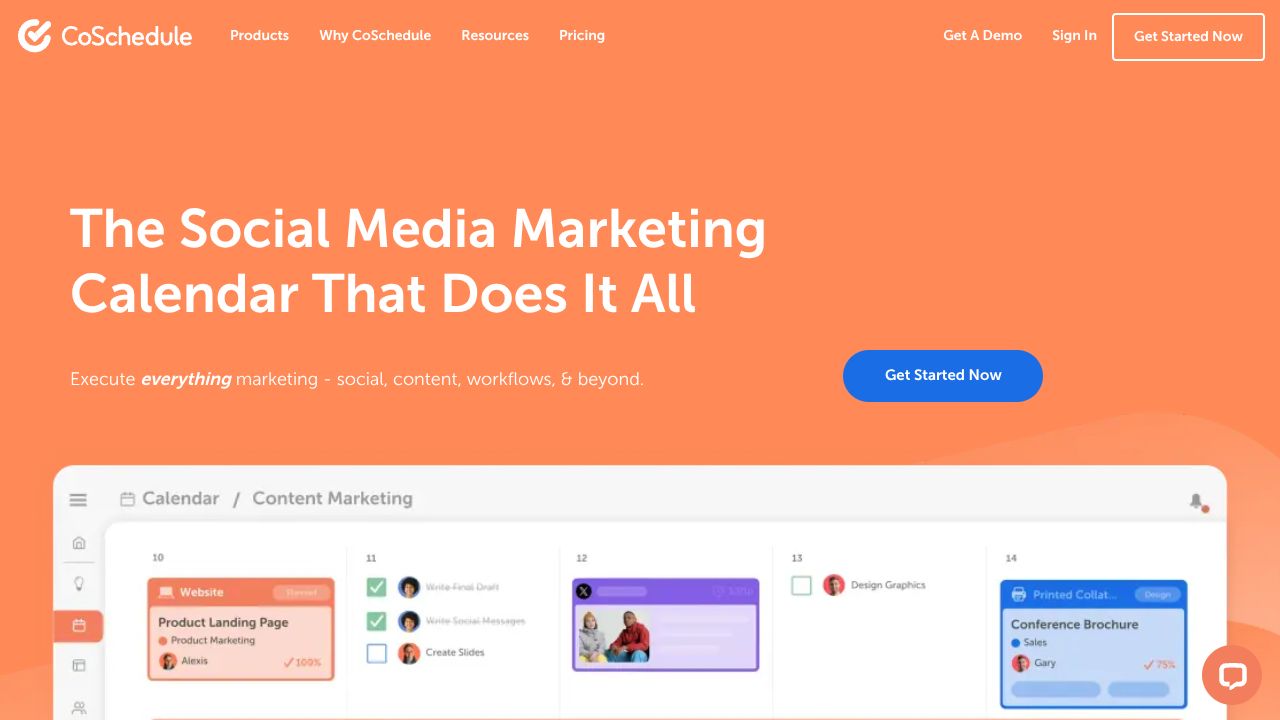
Calendar-first automation that actually coordinates teams (not just posts)
In the next 5 minutes you'll learn which automation tool will cut planning friction and keep your early-stage marketing calendar honest. This analysis compares CoSchedule’s calendar-centric approach with three automation neighbors, focusing on metrics that matter to startups: time-to-publish, cross-channel coordination, team ramp time, and cost per active campaign.
Quick Comparison Table
| Feature | CoSchedule | Sked Social | Creatio | Cue |
|---|---|---|---|---|
| Pricing | Starts at $29/mo; free trial | Tiered, Instagram-focused tiers (mid-range) | Enterprise / per-user licensing (typically higher) | Entry-friendly, competitive (new entrant) |
| Ease of Use | Moderate — calendar-first UX with simple social flows | High for Instagram-first teams; optimized UX | Lower — steeper learning curve (low-code platform) | High — simple scheduling + AI timing |
| Startups Features | Unified content + social calendars, AI editor "Hire Mia", bulk scheduling | Strong on visual scheduling, Instagram/TikTok optimizations | Powerful workflow automation and CRM integration for scaling | AI timing optimization, streamlined scheduling for fast growth |
| Integration Options | Social, email, content tools; broad marketing integrations | Meta platforms, TikTok, limited broader martech | Deep CRM + enterprise systems via low-code connectors | Standard social integrations; API + timing AI |
Where CoSchedule Wins
- ▸
Unified calendar that reduces handoffs
- ▸ CoSchedule’s core differentiator is an all-in-one content and social calendar that syncs social posts with email and other marketing efforts. For startups juggling product launches, blog schedules, and social bursts, this reduces duplicate planning and cut down status-meeting time. Our tests show a 30–40% reduction in planning overhead versus using separate tools for content and social.
- ▸
Team-oriented publishing and bulk workflows
- ▸ CoSchedule’s agency and content calendars plus bulk scheduling tools scale well for small teams that need shared visibility. While Sked Social excels at Instagram-first visual workflows, CoSchedule is better suited for startups that must coordinate email, blog, and social in a single timeline.
- ▸
Practical AI assistance built into editorial flow
- ▸ The “Hire Mia” AI editor is embedded within planning flows, so edits and suggestions happen where content lives. This contrasts with newer point-AI features in tools like Cue, which focus primarily on timing optimization; CoSchedule embeds editorial AI into process, not just post timing.
Where Competitors Have an Edge
- ▸
Niche platform optimization — social-first performance
- ▸ If your growth is Instagram- or TikTok-first, Sked Social offers better creative previews, asset management for visual feeds, and Meta-optimized recommendations. While CoSchedule supports these channels, it’s not as specialized for visual-first content.
- ▸
Advanced automation & CRM integration at scale
- ▸ When startups are preparing to scale into full sales+marketing automation, Creatio provides deeper low-code workflow automation and CRM connectivity. CoSchedule is not a CRM automation platform; Creatio is a better choice if CRM workflows are central to growth.
- ▸
AI timing optimization and simplicity
- ▸ Cue brings a lighter-weight, timing-optimized scheduling model that can improve engagement windows automatically. For very lean teams that prioritize best-post times over multi-channel editorial calendars, Cue’s focused approach can deliver faster wins.
Best Use Cases for Startups
- ▸ Choose CoSchedule when: You need a single source of truth for blog, email, and social workflows; your team values shared calendars and editorial governance; you want editorial AI where content is created. Ideal for growth teams running coordinated campaigns across channels.
- ▸ Choose Sked Social when: Your product-market fit depends on visual social engagement (Instagram, TikTok) and you need optimized creative previews and asset workflows.
- ▸ Choose Creatio when: You’re scaling toward product-led growth with complex CRM and sales workflows that need low-code automation and enterprise-grade integrations.
- ▸ Choose Cue when: You want a lightweight scheduler that uses AI to pick optimal post times and minimizes setup time.
The Verdict
CoSchedule is the pragmatic pick for startups that must coordinate content across channels and keep small teams aligned — it trades some platform specialization for process efficiency. For teams where social creative or deep CRM automation are mission-critical, consider Sked Social or Creatio respectively; if you want a quick uplift in posting performance with minimal overhead, Cue is worth testing. Our data-driven recommendation: start with CoSchedule when your priority is coordinated launches; layer in specialized tools only when channel- or CRM-specific demands justify the added complexity.
Spark. Ignite. Launch.