AI Can’t Save You: Why Manual Logic Deep Dives Still Rule Security
The Fallacy of the "Unbreakable" AI-Generated Codebase
Most AI security tools promise to make manual penetration testing obsolete. In reality, they are making it more essential than ever. As tools like Claude, Cursor, and Copilot become the primary architects of startup codebases, they are exceptionally efficient at sanitizing common source-level vulnerabilities like SQL injection or Cross-Site Scripting (XSS). However, our analysis at Ignition Startups suggests this creates a dangerous "hygiene mirage." While the surface-level code looks clean, the residual risk doesn't vanish; it migrates. Lorikeet Security, founded in 2021, has positioned itself at this specific inflection point. By analyzing their recent engagement with Flowtriq, a workflow automation platform, we see a clear data pattern: AI closes the "what" (code), but manual offensive security is required to find the "how" (runtime logic and architectural state).
Architecture & Design Principles: The PTaaS Evolution
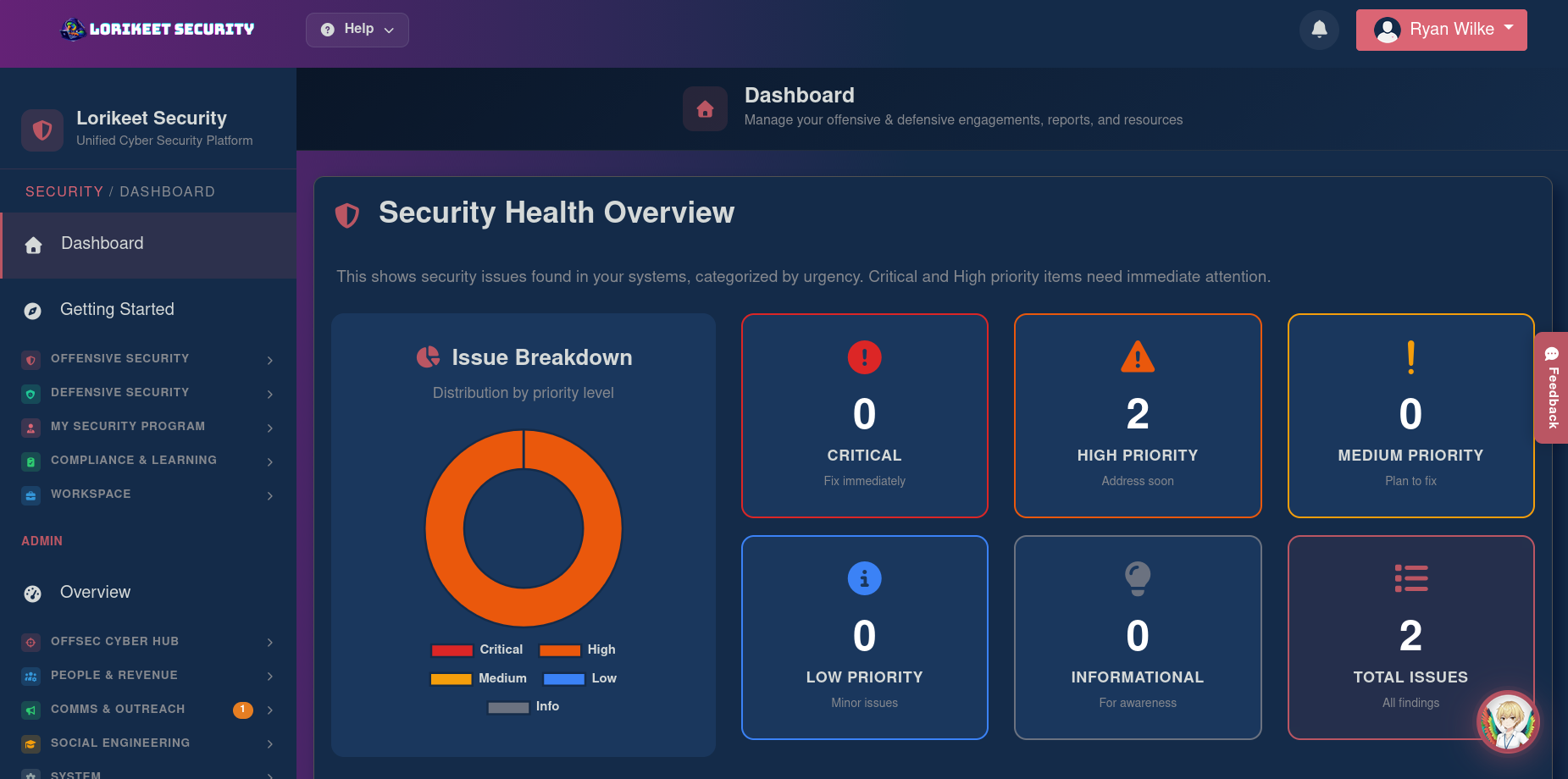
Lorikeet Security operates on a Penetration Testing as a Service (PTaaS) model, a significant architectural shift from traditional "point-in-time" PDF reporting. Their platform is designed as a real-time offensive telemetry hub. Unlike legacy firms that deliver static reports three weeks after an engagement, Lorikeet’s architecture utilizes a live findings portal. This system is built to handle high-velocity data streams from manual testers, translating raw exploit data into actionable tickets via real-time chat and integrated reporting.
The core design philosophy hinges on "The Residual Risk Theory." The architecture assumes that the client has already utilized an AI-driven security layer (like Flowtriq’s Claude-driven audit). Therefore, the platform is optimized not for volume scanning, but for edge-case discovery. It focuses on the runtime environment—where variables like TLS posture, reverse-proxy configurations, and file-system hygiene reside—areas that are structurally invisible to static AI code analysis because they exist in the interaction between the code and the infrastructure.
Feature Breakdown
Core Capabilities
- ▸ Continuous Attack Surface Management (CASM): Rather than a yearly audit, Lorikeet implements a persistent monitoring layer that maps a startup's external-facing assets. This is critical for AI-native firms that deploy frequently, as it catches "shadow" infrastructure or forgotten staging environments that AI code reviewers never see.
- ▸ Hybrid Manual-Logic Testing: In the Flowtriq case study, the manual team identified session management edge cases that bypassed the "perfect" code. This feature involves simulating complex user journeys to find logical flaws, such as privilege escalation or race conditions, which require a holistic understanding of state that current LLMs lack.
- ▸ Integrated SOC-as-a-Service: For startups needing more than just a test, Lorikeet provides a Security Operations Center layer. This acts as a technical extension of the startup’s team, providing 24/7 monitoring and incident response, which is essential for maintaining compliance in regulated sectors like Fintech and Healthcare.
Integration Ecosystem
The Lorikeet ecosystem is built for the modern CI/CD pipeline. Their PTaaS portal serves as a centralized node that bridges the gap between offensive findings and defensive remediation. While the firm maintains a "practitioner-first" approach, their reporting integrates with developer workflows to ensure findings don't sit in a silo. By aligning with tools used by AI-assisted teams, they ensure that manual findings are fed back into the development cycle, effectively "training" the human developers on the specific architectural weaknesses that their AI tools missed.
Security & Compliance
Lorikeet is engineered for high-stakes environments, supporting frameworks including SOC 2, HIPAA, PCI-DSS, HITRUST, and FedRAMP. Their methodology involves rigorous data handling protocols to ensure that the sensitive vulnerability data uncovered during a pentest is encrypted and access-controlled. For startups in fintech or government sectors, this compliance-aligned testing is not just a security measure but a market-access requirement, providing the "practitioner-built" validation that auditors demand.
Performance Considerations
From a performance standpoint, the Lorikeet model prioritizes "Time to Remediation" (TTR) over "Time to Report." Traditional pentesting has a high latency; Lorikeet’s live findings portal reduces this by allowing developers to begin patching High and Critical vulnerabilities while the engagement is still active. This real-time synchronization minimizes the window of exposure. Furthermore, their manual approach ensures a zero-false-positive rate—a metric where automated AI scanners and legacy vulnerability scanners typically struggle.
How It Compares Technically
When compared to traditional legacy firms like NetSPI or Bishop Fox, Lorikeet is more agile and specifically tuned for the AI-native stack. Legacy firms often rely on heavy manual overhead that doesn't account for the speed of AI-assisted development. Conversely, automated platforms like HackerOne or Bugcrowd rely on crowdsourced volume, which can lead to "noise" and duplicate reports. Lorikeet sits in the middle: it offers the deep, specialized expertise of a boutique firm with the modern, portal-driven interface of a SaaS platform. Their specific focus on the "AI Gap"—vulnerabilities left behind after an AI code audit—is a unique technical differentiator that generalist firms have yet to formalize.
Developer Experience
The developer experience (DX) is centered on the PTaaS portal and real-time communication. Instead of deciphering an 80-page PDF, developers interact with findings via a real-time chat interface. This allows for immediate clarification on exploit strings and reproduction steps. The documentation provided in their reports is practitioner-led, meaning it includes the specific curl commands or scripts used to trigger the vulnerability, allowing developers to verify the fix instantly without waiting for a re-test cycle.
Technical Verdict
Lorikeet Security is a high-conviction choice for startups that have already integrated AI into their development lifecycle. The data from the Flowtriq case study is conclusive: even after a thorough AI audit, manual testing found two High-severity issues that were structurally invisible to the LLM.
Strengths: Exceptional at finding runtime, infrastructure, and complex logic flaws; high-velocity reporting via PTaaS portal. Limitations: Not a replacement for basic automated linting; requires a baseline level of architectural maturity to fully utilize the live findings. Ideal Use Case: Series A+ startups in regulated industries (Fintech, Healthtech) who need to move beyond "clean code" to "secure infrastructure."
For more information on their methodology, visit the official site at https://lorikeetsecurity.com.