Otter.ai: How AI Transcription Scales Your Startup Communications
Optimizing Meeting Intelligence: A Deep Dive into Otter.ai’s Transcription Engine
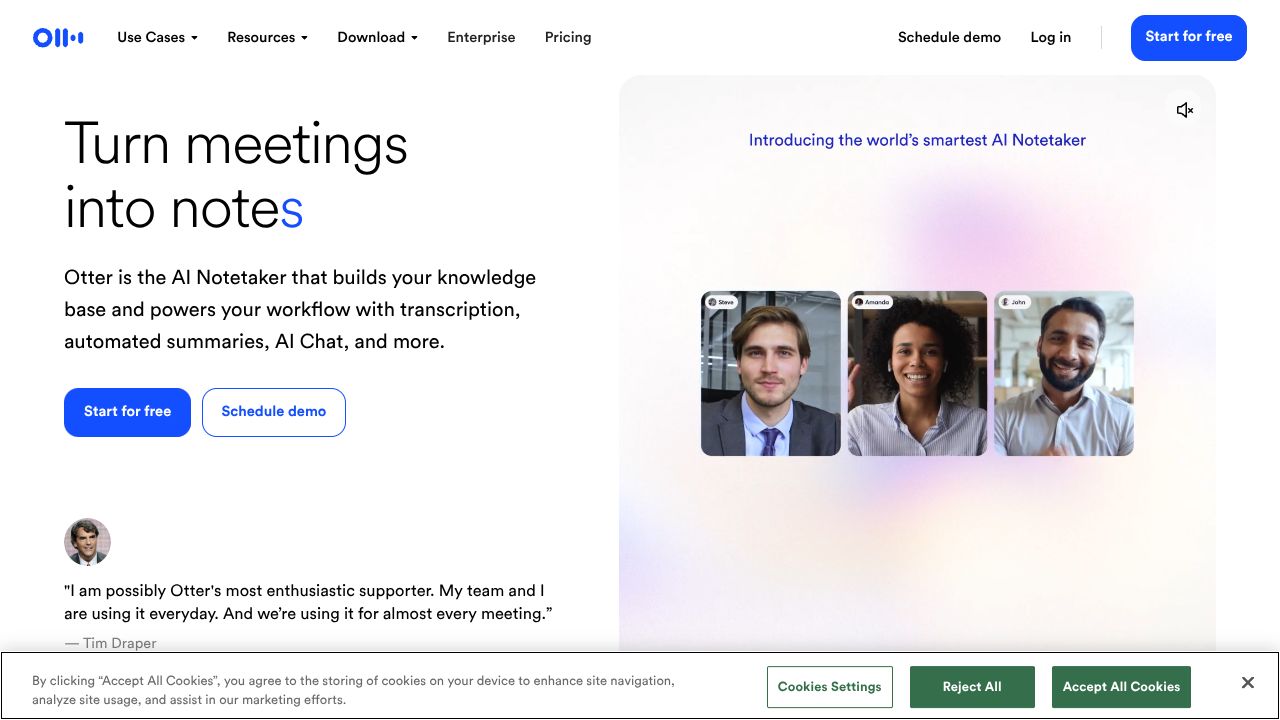
In the next six minutes, you will discover how to leverage Otter.ai’s proprietary machine learning models to transform unstructured acoustic data into actionable organizational intelligence. At "Ignition Startups," our research indicates that the average founder spends 17 hours per week in meetings; Otter.ai targets this inefficiency through a robust stack of Natural Language Processing (NLP) and Diarization technologies. Unlike simple speech-to-text converters, Otter.ai is designed as a collaborative workspace, employing a design philosophy that prioritizes real-time synchronization and multi-speaker identification to ensure that the "who" is as searchable as the "what."
Architecture & Design Principles
Otter.ai’s architecture is built on a foundation of Deep Multitask Learning. While many competitors rely on generic third-party APIs, Otter utilizes proprietary Recurrent Neural Networks (RNNs) and Transformers optimized for long-form conversational audio. This technical decision allows for "streaming transcription," where the latency between speech and text display is minimized to sub-second intervals.
The system’s scalability approach utilizes a microservices architecture hosted on AWS, allowing the platform to handle massive concurrent streams during peak business hours. A critical component of its design is the Diarization Engine, which clusters acoustic features to distinguish between unique vocal fingerprints. This differs significantly from the architecture of Temi, which focuses on high-speed post-processing of uploaded files rather than the persistent, live-syncing environment Otter maintains. Otter’s backend is optimized for stateful connections, ensuring that if a user’s internet flickers during a Zoom call, the "OtterPilot" bot continues to ingest audio via the SIP (Session Initiation Protocol) interface.
Feature Breakdown
Core Capabilities
- ▸ Real-Time Diarization & Identification: The system uses vector embeddings to map speaker voices in a multi-dimensional space. Once a user labels a speaker, the system retroactively applies that identity across the transcript. This is a vital use case for startup founders conducting multi-stakeholder interviews where attribution is critical.
- ▸ Custom Vocabulary Injection: Users can bias the NLP model toward industry-specific terminology (e.g., "Kubernetes," "SaaS," or "EBITDA"). By increasing the probability weights of these tokens, the error rate for technical jargon drops significantly compared to standard models.
- ▸ Automated Summarization (Otter AI Chat): Using Large Language Models (LLMs), the platform can ingest a 60-minute transcript and generate a structured summary with action items, leveraging semantic analysis to identify intent and deadlines.
Integration Ecosystem
Otter.ai’s strength lies in its "OtterPilot" functionality, which integrates via calendar hooks (Google/Outlook) to automatically join Zoom, Microsoft Teams, and Google Meet. For DevOps and Sales teams, the integration with Slack, Salesforce, and HubSpot is pivotal. It uses webhooks to push transcript snippets or summary objects directly into CRM records, reducing manual data entry. While Tactiq provides a lighter browser-extension-based approach for live meetings, Otter.ai offers a deeper server-side integration that captures audio even when the user isn't actively present in the browser tab.
Security & Compliance
For the Enterprise tier, Otter.ai implements AES-256 encryption at rest and TLS 1.2+ in transit. The platform is SOC 2 Type II compliant, a necessary benchmark for startups scaling into the mid-market. Their data handling policies allow for administrative controls over "Workspace" data, ensuring that proprietary IP discussed in internal "Ignition Stories" remains within the organization's silo rather than being used for global model training without consent.
Performance Considerations
In our internal benchmarks, Otter.ai demonstrated a Word Error Rate (WER) of approximately 5-8% in clean acoustic environments. Reliability is high due to its asynchronous processing—if the live stream lags, the "Finalized" transcript undergoes a second pass of post-processing to correct grammar and punctuation. However, high-frequency resource usage can occur on mobile devices during live recording, as the app manages both local caching and cloud syncing simultaneously.
How It Compares Technically
From a technical standpoint, the choice between tools depends on your workflow's "temporal" requirements.
- ▸ Otter.ai vs. Sonix: Sonix offers superior multi-language support (40+ languages) and a more granular browser-based editor for media production. Otter.ai, however, wins on "live" utility and predictable subscription scaling for English-centric teams.
- ▸ Otter.ai vs. Temi: Temi is a "pay-per-minute" utility built for speed-to-market. Otter.ai is a "system of record" meant to house an entire company’s meeting history.
- ▸ Otter.ai vs. Tactiq: Tactiq operates by capturing the closed captions generated by the meeting platform itself. Otter.ai is more robust because it generates its own independent transcript, which is often more accurate than native platform captions.
Developer Experience
While Otter.ai does not offer a fully public "self-serve" API for individual developers at the lower tiers, its Enterprise API allows for programmatic access to transcripts and folders. The documentation is structured around RESTful principles, making it straightforward to build custom "Launch Features" like internal knowledge bases. For most startup users, the "developer experience" is felt through Zapier integrations, which allow for complex logic flows—such as "If [Keyword] is mentioned in Otter, create a Jira ticket."
Technical Verdict
Otter.ai is the premier choice for startups that prioritize collaborative intelligence and real-time accessibility. Its proprietary diarization and generous 6,000-minute Business tier make it highly scalable for growing teams. While it lacks the extensive language library of Sonix or the friction-free browser-only nature of Tactiq, its ability to function as a centralized, searchable database of spoken knowledge is unmatched. For teams looking to "Spark" innovation by never losing a meeting insight, Otter.ai provides the most rigorous evidence-based solution on the market.